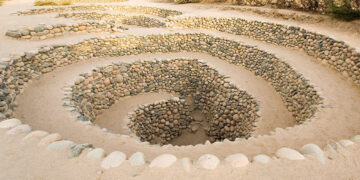







The ancient aqueduct system is still operational today, transporting 18-20 liters of water per second, helping 900 farming households grow fruits and crops in the Nazca desert.
The spectacular spiral sinkholes in the Peruvian desert are actually part of a network of irrigation tunnels , helping people access groundwater and survive the arid weather.
According to Science Alert, the Nasca desert in southern Peru is home to numerous spiral pits dug deep into the ground, known as puquios . These unique structures cannot be dated using carbon dating. The Nasca people also left no evidence regarding when or for what purpose they were constructed.
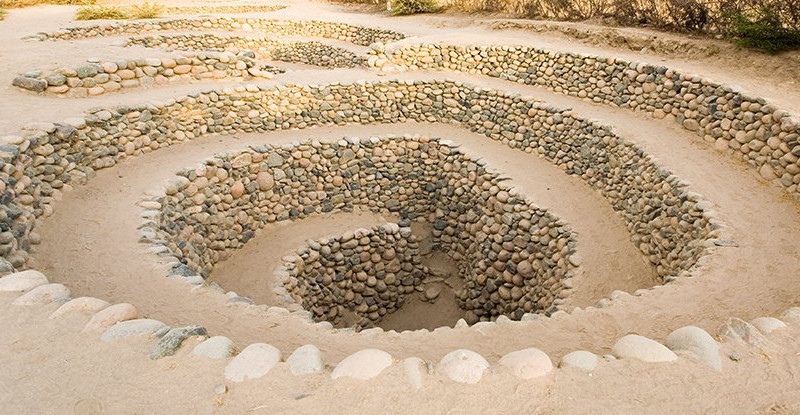
A bizarre spiral sinkhole in the Peruvian desert. (Photo: Pikselstock).
Rosa Lasaponara of the Institute for Environmental Analytical Methods, Italy, used satellite imagery to map the distribution of puquios and investigate their connection to nearby settlements. The results showed that the spiral pits were part of a network of irrigation tunnels in the Nasca desert, allowing people to access groundwater. Lasaponara plans to publish her findings later this year in a paper titled ” The Ancient Nasca World: New Perspectives from Science and Archaeology”.
“The puquios system helps to tap into the inexhaustible water resources throughout the year, contributing to the promotion of intensive agriculture in the arid valley region. The technology for constructing and regularly maintaining these spiral pits relies on the cooperation and tremendous efforts of the social organization system ,” Lasaponara said.
Spiral pits operate by channeling wind into underground conduits, creating pressure that pushes water from deep underground reservoirs to where it is needed. Constructing a system as large-scale as puquios requires a comprehensive understanding of the area’s geology, as well as the annual variability of the water supply.
“The puquios system is the most ambitious irrigation project in the Nasca region, ensuring a year-round water supply for use not only in agriculture but also for household needs,” Lasaponara explained.